

Falls remain one of the leading causes of workplace injuries, especially in construction, maintenance, warehousing, and field service work. For California employers, effective fall protection training California programs are one of the most practical ways to reduce serious injuries, including head trauma.
While Brain Injury Awareness Month is a strong reminder of the long-term impact of head injuries, fall prevention should be part of your safety routine year-round.
This guide covers practical training strategies your team can apply immediately to improve safe climbing habits, reduce risk exposure, and strengthen workplace accountability.
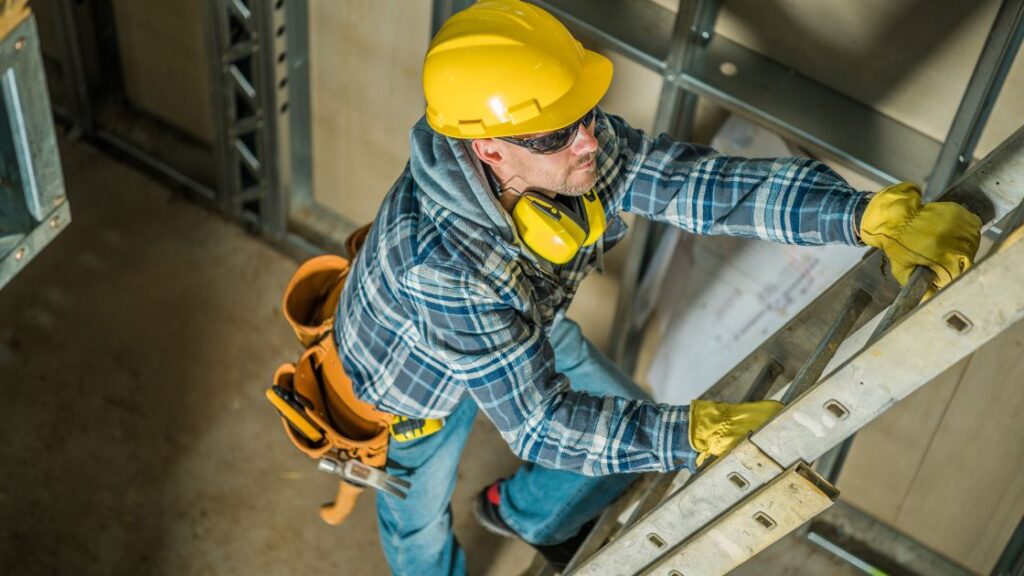
Why fall protection training matters
Head injuries are often associated with major incidents, but many happen during routine work.
Common workplace scenarios include:
- Climbing ladders for quick inspections
- Accessing elevated storage
- Maintenance on rooftops or equipment
- Working near unprotected edges
- Moving between elevated surfaces
Under OSHA standards, fall protection is required in many construction activities at six feet or more above a lower level. California employers should also understand Cal/OSHA fall protection requirements, which may apply based on task type and work environment.
The problem is rarely lack of knowledge. More often, incidents happen because workers rush, improvise, or skip small safety steps.
That is where training matters most.
Build better habits through construction safety training
Strong construction safety training focuses less on memorization and more on repeatable habits.
1. Plan the task before climbing
Before work begins, train workers to ask:
- Is this the right access equipment for the job?
- Is the surface stable?
- Can tools be staged ahead of time?
- Is there another safer access method?
Planning reduces mid-task decisions, which is when mistakes happen.
2. Control the work environment
Many falls happen because of conditions around the worker, not the ladder itself.
Train teams to evaluate:
- Floor conditions
- Lighting
- Obstructions
- Traffic flow
- Door swings
- Forklift activity
Safe work starts with safe surroundings.
3. Reinforce body positioning
Overreaching remains one of the most common causes of falls.
Simple coaching reminders:
- Keep your belt buckle between the rails
- Reposition instead of leaning
- Maintain three points of contact
Supervisors should reinforce these habits consistently.
Ladder safety and OSHA fall protection inspection basics
Ladders are often part of normal work, even when the task is not considered high-risk.
That makes routine inspection critical.
Start every shift with a quick inspection
An effective OSHA fall protection inspection routine should include:
- Feet and stabilizers
- Rails and sidewalls
- Steps and rungs
- Hinges and locking mechanisms
- Labels and weight ratings
- Cleanliness and debris removal
If any part fails inspection, remove it from service immediately.
Use this quick resource for reinforcement:
Set up for stability
Unsafe setup creates predictable failures.
Reinforce these basics:
- Place ladders on level ground
- Never use makeshift leveling methods
- Keep access zones clear
- Secure the work area from traffic
These simple controls help reduce preventable falls.
When training alone is not enough
Training is essential, but some jobs need better systems.
Consider upgraded access solutions when:
- Tasks are repetitive
- Workers carry materials while climbing
- Reach requirements are extended
- Work duration at height increases
Engineering controls often outperform behavioral controls over time.
This is especially important when evaluating cal osha fall protection compliance during recurring elevated tasks.
Supervisor reinforcement makes training stick
Training only works when leaders reinforce expectations.
Supervisors should focus on:
Spot corrections
Correct unsafe habits immediately:
- Leaning
- Skipping inspections
- Carrying tools by hand while climbing
Daily accountability
Short pre-shift reminders improve consistency.
Keep messaging simple:
- Inspect first
- Set up safely
- Reposition often
- Stop if conditions change
Documentation
Your fall prevention process should connect to your broader safety program.
If you are reviewing your safety framework, make sure fall prevention aligns with your IIPP:
What to do after a head impact or near-miss
Near-misses are valuable warning signs.
Train employees to:
- Report immediately
- Stop work
- Follow incident procedures
- Seek evaluation when required
A strong reporting culture helps prevent repeat incidents.
If workers believe reporting creates blame or delays, important hazards stay hidden.
That is a training issue and a leadership issue.
Make fall prevention part of your training rhythm
Safety improves through repetition.
A strong monthly rhythm might include:
- Toolbox talks
- Supervisor observations
- Ladder inspection drills
- Near-miss reviews
- Short refresher training
Consistency creates better habits.
If your team needs support building a stronger training system, PCS Safety offers practical compliance-focused programs designed to strengthen workplace safety habits.
FAQ
What does fall protection training include in California?
It typically includes hazard recognition, equipment inspection, ladder safety, fall arrest systems, and safe work practices based on OSHA and Cal/OSHA requirements.
How often should fall protection equipment be inspected?
Before each use, with periodic documented inspections based on company policy and equipment type.
What are Cal/OSHA fall protection requirements?
Requirements vary by task and industry, but construction work commonly requires fall protection at six feet or more, along with training and inspection requirements.
When should ladder inspections be documented?
Documentation is recommended when part of formal safety programs, after damage, or during scheduled equipment audits.
Strengthen your fall protection training program
Preventing falls is one of the most practical ways to reduce serious injuries and improve workplace safety.
A stronger training process starts with consistent expectations, simple inspection routines, and supervisor reinforcement.
If you need help improving your safety training program or OSHA compliance process: