Most California employers know they need a first aid kit on site. Far fewer have actually confirmed that their CPR and first aid program meets what Cal/OSHA requires, especially after a few rounds of staff turnover. Midyear is a practical time to check, before a gap turns into a citation or, worse, a delay in an actual emergency.
What Cal/OSHA Requires
The requirement differs slightly depending on your industry. Professional services and general industry employers fall under 8 CCR Section 3400, Medical Services and First Aid. Manufacturing and construction employers fall under 8 CCR Section 1512, Emergency Medical Services, which applies specifically to construction projects. Both sections share the same underlying principle: when a clinic, infirmary, or hospital is not in near proximity to the worksite, the employer must ensure trained people are available to render first aid.
In practice, this means every shift needs access to someone trained to respond, not just a stocked first aid kit sitting in a supply closet. Construction sites with multiple employers on the same project can pool trained responders, but the pool has to be large enough to cover the combined workforce on site.
Where Employers Commonly Fall Short
- First aid kits are present but the staff trained to use them have left the company and were never replaced.
- Certifications have quietly lapsed and nobody is tracking renewal dates.
- Training was completed online only, with no hands-on practical component.
- First aid supplies do not match the actual hazards at the worksite, such as chemical exposure risks that call for eyewash stations.
- There is no documented system for contacting emergency medical services if a job site does not have a fixed landline.
CPR Training Specifically
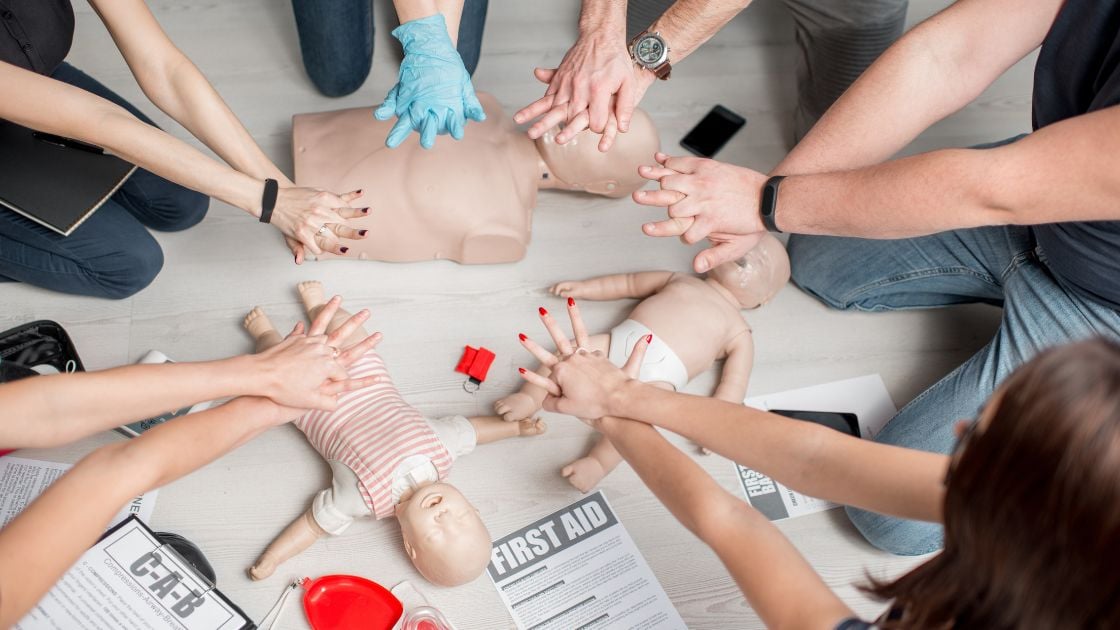
Neither section names CPR by itself as a separate stand-alone mandate, but in practice, first aid readiness for most worksites is expected to include CPR competency as part of a recognized training curriculum. Employers commonly follow American Red Cross or American Heart Association certification standards, which typically require renewal on a set cycle. Because the regulation itself does not name a specific renewal interval, the safest approach is to follow your certifying organization’s renewal schedule rather than assume a fixed timeline.
A Practical Midyear Check
If you are not sure where your CPR and first aid program stands right now, a safety program audit can identify the gap before an inspector does. PCS Safety also runs OSHA compliance training for California employers across both manufacturing and professional services settings, including CPR and first aid certification.
Frequently Asked Questions
Does every California employer need a CPR-certified employee on site?
It depends on proximity to emergency medical services. If a clinic, infirmary, or hospital is not in near proximity to the worksite, the employer must ensure trained people are available to render first aid, which in practice typically includes CPR competency.
What is the difference between Section 3400 and Section 1512?
Section 3400 applies to general industry, including most professional services environments. Section 1512 applies specifically to construction projects and adds requirements around shared responder pools when multiple employers work the same site.
How often do CPR and first aid certifications need to be renewed?
The regulation does not set a fixed renewal interval. Employers generally follow the renewal cycle set by the certifying organization, such as the American Red Cross or American Heart Association.