
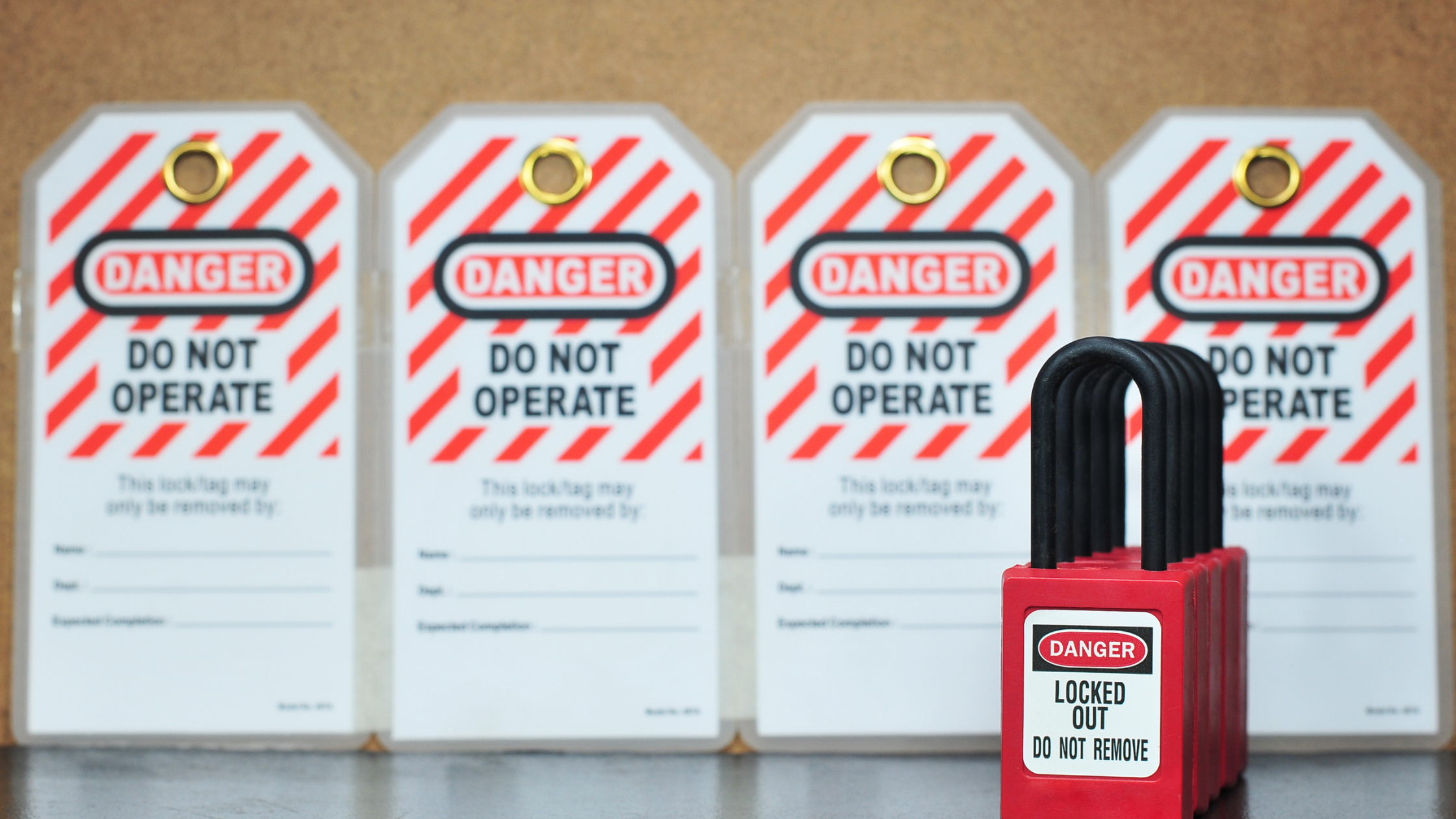
If you are looking for a lockout tagout procedures template, start with the requirements. A template can help organize your program, but it cannot replace equipment-specific procedures. To work as intended, it must reflect your actual machines, energy sources, isolation points, and maintenance tasks.
For California employers, lockout/tagout requirements may involve both federal OSHA 29 CFR 1910.147 and Cal/OSHA Title 8 Section 3314. These standards focus on one core risk: unexpected energization, startup, or release of stored energy during servicing and maintenance work.
The practical takeaway is simple. Your written LOTO program must give employees clear steps they can follow at the equipment level.
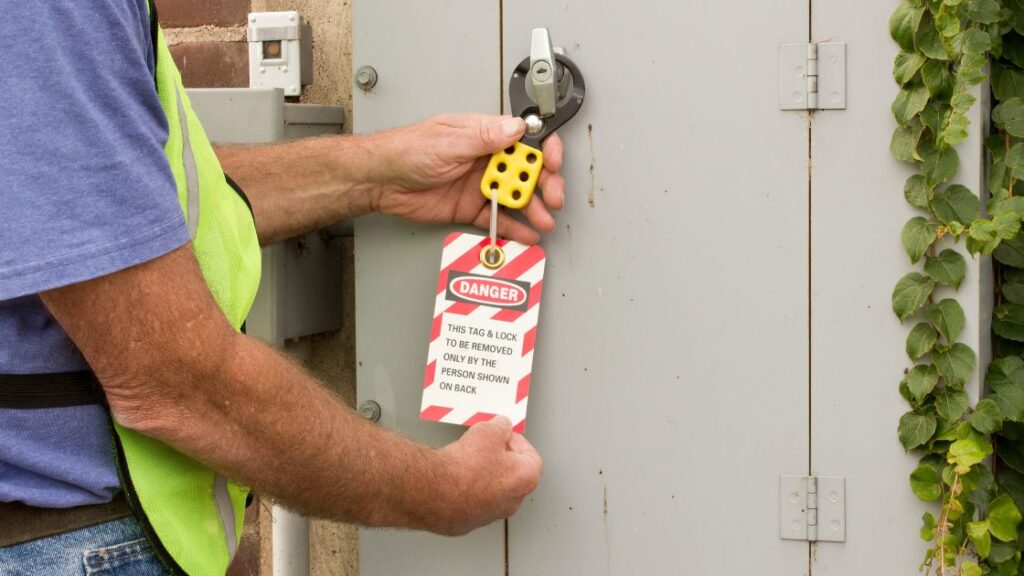
Why Lockout/Tagout Procedures Matter
Lockout/tagout remains one of OSHA’s most frequently cited standards. In OSHA’s FY 2025 Top 10 list, control of hazardous energy, often called lockout/tagout, ranked fourth among federal OSHA’s most frequently cited standards.
These citations do not usually happen because employers have never heard of LOTO. More often, the written program stays too general. Training may not match actual equipment. Annual inspections may fall through the cracks. Procedures may also stay unchanged after equipment or process updates.
A basic policy that says employees must “lock out equipment before maintenance” is not enough. A lockout tagout procedures template should help document the exact steps employees need before they place their hands, tools, or bodies near hazardous energy.
What a Lockout Tagout Procedures Template Should Include
A useful lockout tagout procedures template should create a repeatable structure for each machine or piece of equipment. At a minimum, it should prompt you to document:
Equipment name or identification number
Equipment location
Authorized employees or job roles that may use the procedure
All energy sources, including electrical, mechanical, hydraulic, pneumatic, chemical, thermal, gravitational, or other stored energy
The type and magnitude of each energy source
Shutdown steps
Energy isolation points
Lockout or tagout hardware required
Steps for releasing or controlling stored energy
Verification steps before work begins
Steps for safely restoring energy after work is complete
Special precautions, limitations, or notes
Date created, date reviewed, and person responsible for review
The strongest procedures use plain language. They also follow the order employees will use in the field. A technician should not have to interpret a general policy while standing in front of a machine.
Instead, the procedure should answer clear questions. What should the employee shut down? Where should they isolate energy? Which device should they apply? How should they verify zero energy? What steps should they follow before restoring power?
Written Program vs. Equipment-Specific Procedures
A complete LOTO system usually has two connected parts: the written energy control program and equipment-specific energy control procedures.
The written program explains the overall rules. It should define the program’s purpose, employee responsibilities, training expectations, hardware rules, inspection requirements, and enforcement practices.
Equipment-specific procedures explain the actual steps for each machine. In some cases, one procedure may cover similar equipment if the steps and hazards truly match. Each procedure should identify energy sources, isolation points, shutdown steps, lock placement, verification methods, and restart steps.
Many employers have one piece but not the other. A written program without equipment-specific procedures creates a major gap. Equipment-specific procedures without a governing program can also cause confusion. Employees still need to understand roles, training rules, inspection requirements, and lock removal procedures.
Cal/OSHA Considerations for California Employers
Cal/OSHA Title 8 Section 3314 applies to work such as cleaning, repairing, servicing, setting up, and adjusting machinery or equipment. It focuses on situations where unexpected energization, startup, or stored energy release could injure employees.
California employers should review the state standard when they build or update a LOTO program. Cal/OSHA uses terms such as “prime movers, machinery and equipment.” The standard can also cover tasks such as unjamming machinery and equipment.
Because of this, your lockout tagout procedures template should reflect the work employees actually perform. Do not limit the review to a list of machines. Look at cleaning, jam clearing, setup, adjustment, and servicing tasks. If the task exposes employees to hazardous energy, your program should address it.
Where LOTO Templates Often Fall Short
A template helps only when the employer completes it with accurate workplace information. Common weaknesses include:
Using one generic procedure for all equipment
Listing electrical energy but missing pneumatic, hydraulic, thermal, or gravity hazards
Failing to identify the exact disconnect, valve, block, or isolation point
Omitting stored energy release steps
Leaving out verification steps
Not assigning procedure ownership
Failing to review procedures after equipment changes
Training employees on the policy but not the machine-specific procedure
Keeping procedures in an office instead of making them available where work occurs
You can test a procedure with a simple field review. Give it to an authorized employee who knows the equipment. Ask whether the document matches the real task. If it skips steps, uses vague wording, or does not match the machine, revise it before employees rely on it.
Lockout Tagout Training Requirements
Lockout tagout training should match employee roles.
Authorized employees apply and remove lockout or tagout devices while they perform covered servicing or maintenance tasks. They need to understand the hazardous energy sources involved. They also need to know the type and magnitude of energy, how to isolate it, and how to verify that the equipment is safe before work begins.
Affected employees operate or use equipment that employees may lock or tag out. They may also work in areas where servicing or maintenance occurs. These employees need to understand the purpose of lockout/tagout. They should recognize locked or tagged equipment and know not to restart or interfere with it.
Other employees may also work near equipment under lockout or tagout. They should understand that they must not remove, bypass, or ignore lockout and tagout devices.
PCS Safety provides OSHA compliance training that can help employers align instruction with workplace safety requirements. Training topics may include lockout tagout training, machine guarding training, and related osha compliance training needs.
Annual Procedure Review and Inspection
Do not treat LOTO procedures as one-time documents. Equipment changes, production updates, maintenance practices, and staffing changes can all affect a procedure’s accuracy.
OSHA 1910.147 requires employers to inspect energy control procedures at least annually. The inspection should confirm that employees follow the procedure and understand their responsibilities. Employers should also document the inspection.
A practical annual review should ask:
Does the procedure still match the equipment?
Does it list all energy sources?
Are the isolation points still correct?
Have any guards, controls, valves, disconnects, or stored energy hazards changed?
Do authorized employees follow the written steps?
Are affected employees clear on their responsibilities?
Are training records current?
Did any near misses, maintenance issues, or inspection findings involve LOTO?
When a procedure changes, employees need clear communication. In many cases, they also need updated training before they use the revised procedure.
How LOTO Connects to Your IIPP
California employers must maintain an effective Injury and Illness Prevention Program under Title 8 Section 3203. Your LOTO program should connect to that broader safety system.
If hazardous energy exists in your workplace, your IIPP should support how you identify, evaluate, correct, communicate, and train on that hazard. LOTO procedures, inspection findings, training records, and corrective actions should all fit into the same safety management process.
PCS Safety supports California employers with Injury and Illness Prevention Program development and safety program alignment. This can help employers find gaps between written programs, training records, and field practices.
Practical Checklist Before Using a LOTO Template
Before you rely on a lockout tagout procedures template, review it against these questions:
Does it identify the specific machine or equipment?
Does it list all hazardous energy sources?
Does it include stored energy and residual energy?
Does it identify the type and magnitude of energy where applicable?
Does it show the exact isolation points?
Does it explain the shutdown sequence?
Does it explain how to block, bleed, restrain, release, or otherwise control stored energy?
Does it identify required lockout or tagout devices?
Does it include verification steps?
Does it include safe restart steps?
Has someone familiar with the equipment reviewed it?
Have authorized employees received training on the procedure?
Can employees access the procedure where they need it?
A template that cannot answer these questions is not ready for field use.
FAQ
What must a lockout tagout procedures template include?
A lockout tagout procedures template should include the equipment name and location, energy sources, shutdown steps, isolation points, lockout or tagout hardware, stored energy control steps, verification steps, and restart steps. It should be customized for the actual equipment and work being performed.
Can a downloaded LOTO template satisfy OSHA or Cal/OSHA requirements?
A downloaded template can be a starting point, but it is not enough by itself. It must be customized to the specific machines, energy sources, isolation points, procedures, and employee roles in the workplace.
Who needs lockout tagout training?
Authorized employees who apply and remove lockout or tagout devices need training on the hazardous energy they control and the procedures they use. Affected employees need training on the purpose of LOTO, what locked or tagged equipment means, and why they must not restart or interfere with the equipment.
How often should lockout tagout procedures be reviewed?
Energy control procedures should be inspected at least annually. Procedures should also be reviewed when equipment, processes, hazards, or work practices change.
Is Your LOTO Program Built Around Your Actual Equipment?
A lockout tagout procedures template is only useful when it becomes a clear, equipment-specific procedure. Employees should be able to follow it without guessing.
If your current LOTO program came from a generic document, it may have gaps. The same is true if no one has reviewed it recently or if it no longer matches your actual machines.
You can also review your LOTO program alongside broader electrical safety practices with the Workplace Electrical Safety Checklist.
PCS Safety helps employers evaluate written safety programs, align training with real workplace hazards, and improve documentation for OSHA and Cal/OSHA readiness.