
Manufacturing environments rely on powerful equipment, repetitive processes, and fast-moving production schedules. Those same conditions can create serious hazards when machine guarding is missing, removed, bypassed, damaged, or misunderstood. That is why machine guarding training is an essential part of a practical manufacturing safety program.
Machine guarding training helps employees understand where hazards exist, why guards matter, when equipment should not be operated, and how to report concerns before an injury occurs. It also helps supervisors and safety leaders reinforce expectations consistently across shifts, departments, and worker groups.
For California manufacturers, machine guarding is especially important because Cal/OSHA requirements apply to many types of machinery and hazardous points of operation. Cal/OSHA requires guarding where employees come within the danger zone of machines with actions such as cutting, punching, shearing, rolling, mixing, or similar motions.
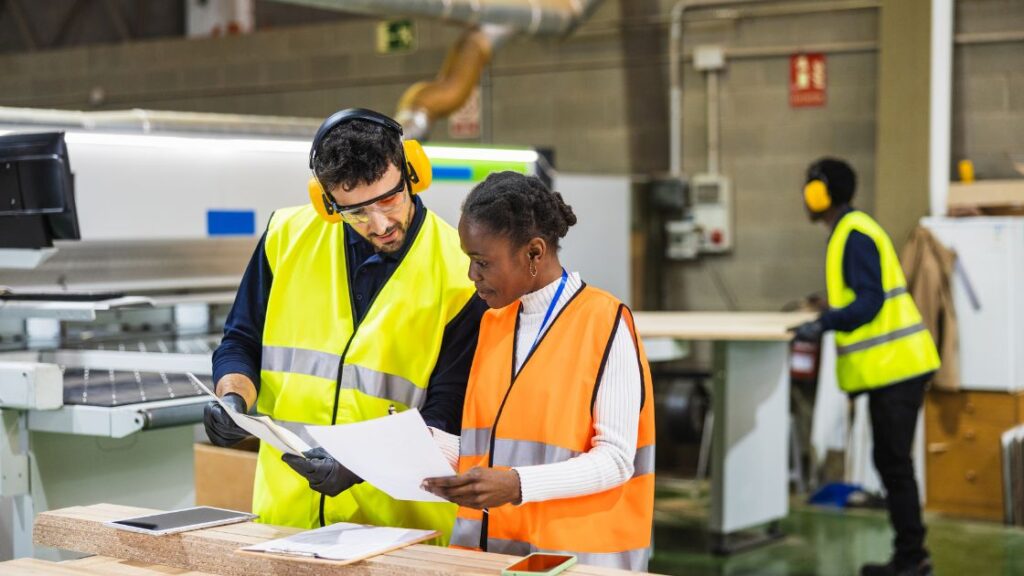
Why Machine Guarding Training Matters
Machine guarding is designed to protect employees from hazards created by moving parts, points of operation, ingoing nip points, rotating components, flying chips, sparks, and other equipment-related risks. OSHA’s general machine guarding standard requires one or more guarding methods to protect operators and other employees in the machine area from these hazards.
Training matters because guards only work when employees understand their purpose and use equipment correctly. A guard that is removed for convenience, bypassed to speed production, or ignored because no one understands the hazard can create severe risk.
Effective machine guarding training helps workers answer practical questions:
- What machine parts can cause injury?
- What guards or devices are required before operation?
- What should employees do if a guard is missing or damaged?
- When must equipment be stopped and reported?
- Who is authorized to adjust, repair, clean, or service equipment?
- How does machine guarding connect to lockout/tagout procedures?
When employees can answer those questions clearly, training becomes more than a compliance activity. It becomes part of how the facility prevents serious injuries.
Common Machine Guarding Hazards in Manufacturing
Manufacturing facilities often include a wide range of equipment, from presses and conveyors to mixers, saws, rollers, packaging machines, and automated systems. Each type of equipment can present different guarding concerns.
Common machine guarding hazards include:
- Exposed points of operation where cutting, bending, punching, or forming occurs
- Rotating shafts, gears, belts, pulleys, chains, and sprockets
- Ingoing nip points on rollers or conveyors
- Flying chips, sparks, or fragments from cutting or grinding
- Moving parts that can catch clothing, gloves, hair, or tools
- Guards that have been removed and not replaced
- Interlocks or safety devices that are bypassed
- Poor visibility around equipment
- Unclear procedures for clearing jams or performing adjustments
Machine guarding training should be specific to the equipment employees actually use. A general overview may be useful, but workers also need task-based instruction that connects directly to their job duties.
What Effective Machine Guarding Training Should Include
A strong training program should be practical, visual, and reinforced on the floor. Employees should not only hear about machine guarding in a classroom. They should see examples, review real equipment, and understand how expectations apply during normal operations.
1. Hazard Recognition
Employees should learn how to identify hazardous machine motions and danger zones. This includes recognizing where hands, fingers, clothing, or tools could be pulled into equipment or exposed to moving parts.
Training should cover common hazard categories such as:
- Point of operation
- Power transmission components
- Rotating parts
- Reciprocating or transverse motion
- Nip points
- Stored energy
- Flying particles or sparks
2. Guarding Methods
Employees should understand the types of guards and protective devices used in the facility. OSHA identifies examples such as barrier guards, two-hand tripping devices, and electronic safety devices as guarding methods.
Training may include:
- Fixed guards
- Adjustable guards
- Interlocked guards
- Self-adjusting guards
- Presence-sensing devices
- Two-hand controls
- Pullbacks or restraints, where applicable
- Shields or barriers for flying debris
Employees should also know that guards must not create a new hazard and should not interfere with safe machine operation.
3. Reporting Missing or Damaged Guards
A machine guarding program depends on fast reporting and follow-up. Employees should know how to report a missing, loose, damaged, or bypassed guard. Supervisors should respond quickly and document corrective action.
Training should make one rule clear: if required guarding is not in place, the machine should not be operated until the issue is reviewed and corrected by authorized personnel.
4. Safe Operating Procedures
Machine guarding training should be tied to written procedures for starting, operating, stopping, cleaning, adjusting, and inspecting equipment. Employees should understand which tasks they are authorized to perform and which tasks require maintenance, supervision, or lockout/tagout.
5. Supervisor Reinforcement
Supervisors play a major role in whether training becomes daily practice. They should know how to coach employees, correct unsafe behavior, document concerns, and recognize safe work practices. When supervisors treat guarding as optional, employees may do the same.
How Machine Guarding Connects to Lockout Tagout Training
Machine guarding and lockout tagout training are closely connected, but they are not the same thing. Machine guarding protects employees during normal equipment operation. Lockout/tagout protects employees during servicing, cleaning, repairing, setting up, adjusting, or similar tasks where unexpected energization or startup could cause injury.
Cal/OSHA Title 8, Section 3314 applies to cleaning, repairing, servicing, setting up, and adjusting machines and equipment when unexpected energization, startup, or release of stored energy could injure employees. Cal/OSHA also provides a lockout/tagout eTool to help employers understand effective procedures and regulatory requirements.
This distinction should be part of training. Employees need to understand that a guard does not replace lockout/tagout when servicing or maintenance requires hazardous energy control. Likewise, lockout/tagout procedures do not eliminate the need for guarding during normal operation.
Temporary Workers Need the Same Safety Investment
Temporary and contingent workers may face higher risk when they are placed into production quickly, assigned to unfamiliar equipment, or trained inconsistently. The original article noted the importance of treating temporary workers as part of the same safety system as permanent employees.
Manufacturers should make sure temporary workers receive:
- Site-specific orientation
- Equipment-specific machine guarding training
- Clear instructions on what they may and may not operate
- Reporting procedures for hazards or missing guards
- Lockout/tagout awareness where relevant
- A supervisor or mentor who can answer questions
- Training in a language and format they understand
Employers should not assume that a staffing agency has covered site-specific hazards. If a worker is operating or working near machinery in your facility, your team should confirm that the worker understands the hazards and protective measures for that assignment.
Using Audits to Strengthen Manufacturing Safety Training
Machine guarding training should be supported by routine inspections and safety audits. Audits help identify gaps between what the written program says and what is actually happening on the production floor.
A practical machine guarding audit should review:
- Whether required guards are installed and secured
- Whether guards are damaged, loose, altered, or bypassed
- Whether employees understand guarding requirements
- Whether warning signs and procedures are visible
- Whether lockout/tagout is used for servicing and adjustments
- Whether supervisors correct unsafe practices consistently
- Whether previous corrective actions were completed
For California manufacturers, these activities can also support broader Injury and Illness Prevention Program expectations, including hazard identification, correction, communication, and training.
Building a Stronger Safety Culture Around Equipment
A strong safety culture does not develop from one training session. It develops when leaders, supervisors, maintenance teams, operators, and temporary workers all understand that machine safety is a shared responsibility.
To strengthen safety culture, manufacturers should:
- Encourage employees to report guarding issues without fear of blame
- Respond quickly when hazards are reported
- Include machine guarding topics in toolbox talks
- Review near misses involving equipment
- Recognize employees who stop work to report hazards
- Train supervisors to coach rather than ignore unsafe shortcuts
- Revisit training when equipment, processes, or staffing changes
This is where manufacturing safety training becomes more effective. Instead of treating machine guarding, lockout/tagout, and HazCom as separate check-the-box topics, employers can connect them to the real decisions employees make every day.
Where HazCom Training Fits In
While machine guarding focuses on physical equipment hazards, hazcom training remains important in many manufacturing environments. Employees may work with coolants, lubricants, solvents, cleaning chemicals, adhesives, coatings, or other hazardous substances.
Manufacturing safety programs should help employees understand how different hazards overlap. For example, a worker cleaning a machine may need to understand chemical hazards, machine guarding requirements, and lockout/tagout procedures before beginning the task.
Integrated training helps employees see the full risk picture instead of treating each safety topic as unrelated.
How PCS Safety Can Help
PCS Safety helps businesses build practical safety programs that support compliance and protect employees. For manufacturers, that may include reviewing current safety practices, improving training programs, supporting OSHA compliance efforts, and helping teams identify gaps before incidents occur.
PCS Safety can support employers with:
- Machine guarding training
- Manufacturing safety training
- Lockout tagout training
- HazCom training
- Safety audits and hazard assessments
- Cal/OSHA-focused compliance support
- Supervisor and employee safety coaching
Learn more about PCS Safety’s compliance support here: OSHA Compliance Service
FAQ
What should machine guarding training include?
Machine guarding training should include hazard recognition, types of guards and protective devices, safe operating procedures, reporting steps for missing or damaged guards, and the difference between normal operation and tasks that require lockout/tagout.
How often should manufacturing employees receive machine guarding training?
Employees should receive machine guarding training before operating or working near relevant equipment, when equipment or procedures change, when unsafe practices are observed, and when refresher training is needed to reinforce expectations.
How does machine guarding training relate to lockout tagout training?
Machine guarding training focuses on protection during normal machine operation. Lockout tagout training focuses on controlling hazardous energy during cleaning, servicing, repairing, setting up, or adjusting equipment. Both are important in manufacturing environments.
Does machine guarding training support Cal/OSHA compliance?
Machine guarding training can support Cal/OSHA compliance by helping employees understand hazards, follow safe procedures, report guarding issues, and avoid unsafe equipment operation. It should be used alongside written programs, inspections, corrective actions, and other required training.
Strengthen Manufacturing Safety with PCS Safety
Machine guarding training is one of the most practical ways manufacturers can reduce risk around equipment. When employees understand hazards, supervisors reinforce expectations, and leadership responds quickly to concerns, safety becomes part of daily production.
PCS Safety can help your team review current practices, improve training, and build a stronger safety program for manufacturing operations.